

LiberNovo Omni Gen: the office chair that claims to move with you
A backrest with eight flexible panels, a motorised lumbar system and a battery inside — LiberNovo's Omni Gen wants to rethink what an ergonomic chair does while you sit still.

What it is
The LiberNovo Omni Gen is an ergonomic office chair built around a motorised backrest, designed for people who spend long stretches of the day seated at a desk. It comes in two frame sizes — 45 cm and 48 cm — and two finishes, Graphite and Glacier, so buyers can match seat depth to their own build and their office’s colour scheme.
The O!deal team met LiberNovo at IFA Berlin 2026. What stands out is the ambition behind the Omni Gen: rather than a fixed frame with a few manual levers, the chair is described by LiberNovo as a dynamic system that tracks and responds to the body, not just a seat that holds it.
It’s aimed at anyone doing sustained desk work — home offices, open-plan floors, studios — where a chair sits in one spot for years and needs to accommodate different postures, heights and habits throughout a working day.

Why it exists
Most ergonomic chairs on the market are static: you set the lumbar support once, lock the recline angle, and the chair stays that way until you manually change it again. LiberNovo’s pitch is that bodies don’t work like that — people shift, slouch, lean back to think, lean forward to type — and a chair that can’t follow those micro-movements ends up supporting the sitter for maybe a third of the time they’re actually in it.
According to the brand, the Omni Gen is designed to close that gap using a backrest that flexes with the sitter in real time, rather than holding a single fixed shape. The intent, as LiberNovo describes it, is a chair that adapts continuously instead of asking the user to keep readjusting knobs and levers throughout the day.
What matters
The recline mechanism offers a range of 105° to 160° across five positions. That’s a wide window — from an almost upright working posture to something close to a rest position — which matters for anyone who alternates between focused typing and moments of leaning back to read or think, without needing to get up and change chairs.
The backrest itself is built from eight flexible panels connected through fourteen double-connection points and sixteen ball pivots. This segmented construction is what allows the chair to flex in sections rather than as one rigid slab, which in principle lets it follow the curve of the spine more closely than a single moulded backrest could.
Backrest load capacity is rated at 136 kg (300 lbs), and the chair’s overall user specifications state a height range of 153–186 cm (5’0”–6’1”) with a weight limit of up to 136 kg under the BIFMA standard or 110 kg under the European EN1335 standard. Two figures for the same limit — worth knowing if you’re checking against European versus North American benchmarks.
Neck support is rated at 5 kg, delivered through a neck cushion made of hydrophilic memory foam — a material choice LiberNovo highlights as central to comfort in this specific part of the chair. Armrests slide up to 100 mm and are rated for 400 N of force across 60,000 cycles, which points to sustained daily adjustment rather than a set-and-forget position.
Power for the motorised functions comes from a built-in 2200 mAh battery, meaning the chair’s dynamic movement doesn’t require it to stay permanently plugged in.
Day to day
Day to day, the Omni Gen is positioned as a chair you adjust less, not more — the backrest flex and lumbar tracking are meant to happen automatically rather than through constant manual tweaking. The lumbar area itself has a stated range of 1.97 inches, and seat height adjusts across 4.3 inches, giving a practical window for finding a comfortable working position at a standard desk.
The armrests slide horizontally to suit different arm lengths and desk widths, and the five recline positions let the chair move between upright focus work and a more relaxed lean without needing tools or a full reconfiguration.
Technical specifications
| Characteristic | Value |
|---|---|
| Recline range | 105° to 160°, 5 positions |
| Battery | 2200 mAh |
| Armrest slide | up to 100 mm |
| Backrest load capacity | 136 kg (300 lbs) |
| Backrest structure | 8 flexible panels, 14 double-connection points, 16 ball pivots |
| Neck support | 5 kg |
| User height range | 153–186 cm (5’0”–6’1”) |
| User weight limit | up to 136 kg (300 lbs) BIFMA / 110 kg EN1335 |
| Armrest durability | 400 N, 60,000 cycles |
| Certifications | BIFMA X5.1, UL 962, UL 2054, UL 62133-2, FCC, GREENGUARD, ANSI/BIFMA X7.1, TB117, CA Prop 65 |
| Manufacturer warranty | Frame: 6 years, Electronics: 2 years |
| Neck cushion material | Hydrophilic memory foam |
| Backrest materials | Micro-elastic fabric, flexible foam, aircraft-seat-grade resilient material |
| Seat cushion | Multi-density cushion |
| Lumbar adjustment range | 1.97 in |
| Seat height adjustment range | 4.3 in |
| Product reference | CP-GW-1000087-00-05 |
What the brand says
LiberNovo claims that the Omni is the first dynamic ergonomic chair in the world, positioning it as a category apart from static ergonomic seating rather than an incremental improvement on it. The brand also states that it uses what it calls the industry’s first hydrophilic sponge for the neck cushion, tying that specific material choice directly to the neck-support figure listed above.
Both claims come from LiberNovo itself and describe intent and design philosophy — how the chair is meant to behave and what sets it apart, according to the company’s own framing, rather than independently verified outcomes.
Why it caught our eye
We were drawn in by the sheer mechanical ambition here — eight backrest panels, sixteen pivots, a battery just to keep the lumbar support responsive. It's a genuinely different way of thinking about a chair.
Exactly the kind of brand we’d love to come across on O!deal one day.

Also worth reading
- O!radarHyper Super
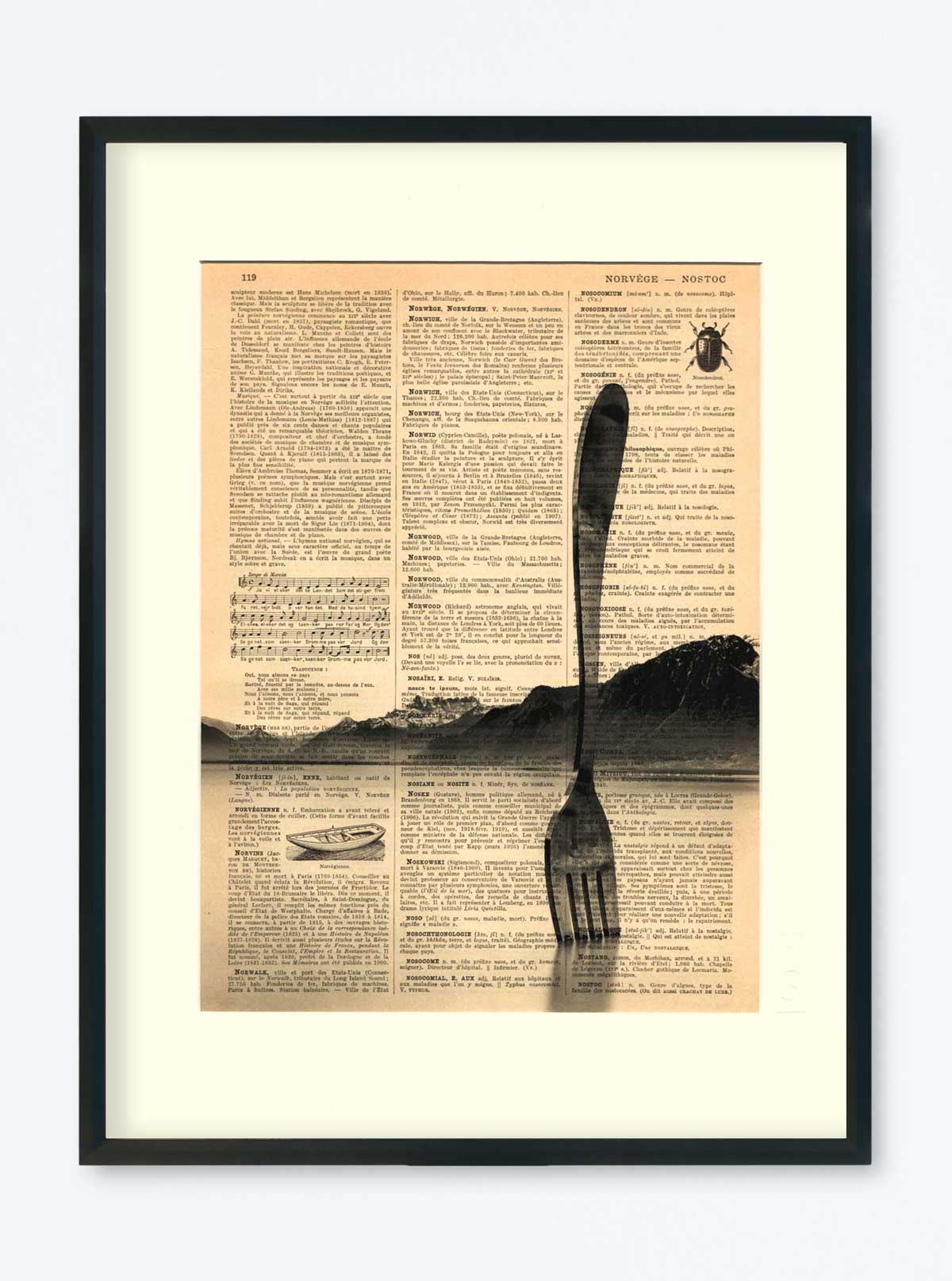
Vevey's fork sculpture, printed on a page of history
A century-old encyclopaedia page becomes the canvas for a one-off poster, made at Hyper Super's workshop in Vaud.
- O!radarDuralex
Duralex Lys: the rectangular tempered glass bowl made in the Loiret
A rectangular tempered glass bowl, designed to go from worktop to microwave without a second thought. Made in France, by a company now owned by its own employees.
- O!radarTentsile
Tentsile Trillium: a three-person tree tent built for 399 kg, with a patented anti-roll system
Suspended above the ground on three anchor points, the Trillium promises no more rolling to the centre and a load rating that comfortably covers a small family.