


Serax: Forty Years of Belgian Design Shaped by Craftspeople Worldwide
Founded in Antwerp in 1986 by two brothers, Serax turns stone, wood, metal, glass and clay into tableware, lighting and furniture made by artisans across the globe.
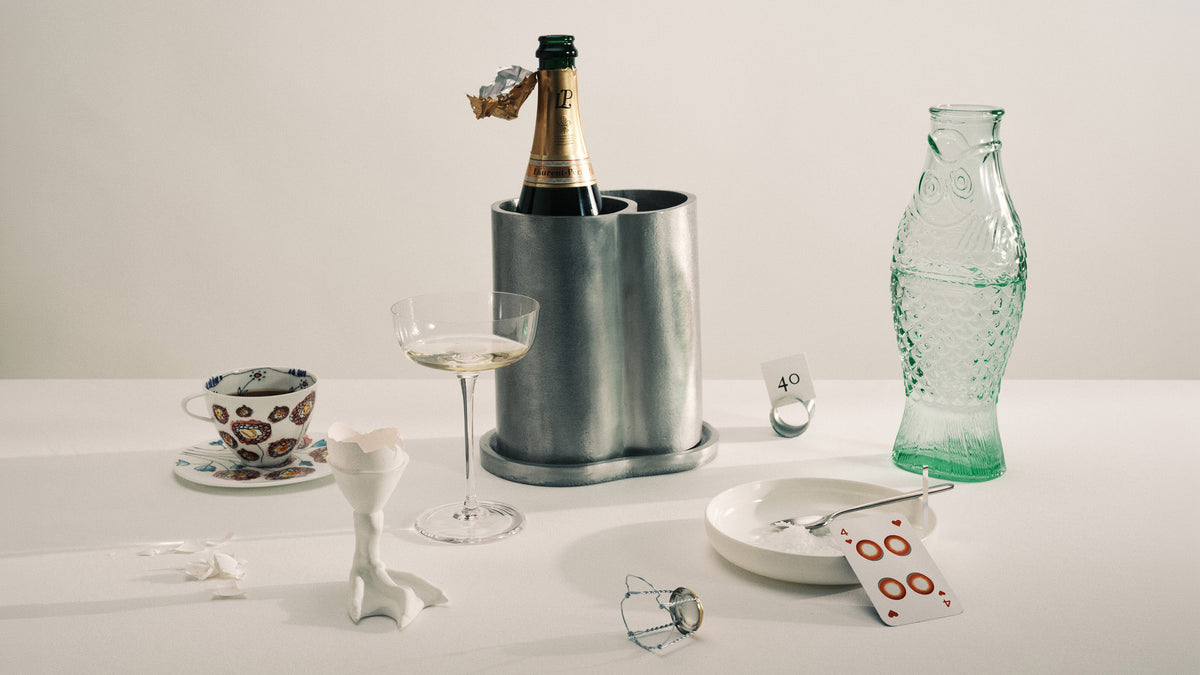
Two brothers, a city on the Scheldt, and a simple bet made in 1986: that everyday objects for the home could carry the same thought as a piece of furniture design. Serge and Axel Van Den Bossche built Serax from that premise, and the company has kept its base in Antwerp ever since. In 2026 the brand marks forty years of design, craft and collaboration — a long run for a house that still describes itself, at heart, as a maker of things for daily use.
The story
Serax was founded in 1986 by Serge and Axel Van Den Bossche, and Antwerp has remained the team’s home base since. The founding idea was straightforward: bring contemporary design into the objects people use every day, rather than reserving it for furniture or architecture alone. That meant working with designers from outside the world of tableware and homeware, and letting their ideas take shape in materials as varied as stone, wood, metal, glass and clay. Four decades later, the anniversary being marked in 2026 is framed by the brand itself as forty years of design, craft and creative collaboration — a continuity rather than a reinvention.

The range
What Serax makes spans tableware, home accessories, lighting, pottery and furniture, which is a wide brief for a single brand to hold together. The link between these categories is less a single look than a working method: bring in designers with distinct personalities, then let each object be made in the material that suits it. A ceramic bowl and a metal lamp do not need to resemble each other to belong in the same collection, and Serax’s catalogue reflects that. The range covers the table, the shelf and the room, which suggests a brand built for people furnishing a home piece by piece rather than buying a matching set in one go.

The craft
Serax works across stone, wood, metal, glass and clay, and the objects are produced by artisans located around the world rather than in one central factory. That choice of language — craftspeople rather than a production line — matters for how the pieces are described: the brand states that craftsmanship is the only route to real innovation and quality, which is a claim about process as much as about the finished object.

What the brand stands for
According to Serax, the guiding philosophy behind its manufacturing is accessibility, quality and functionality — three words that sit somewhat in tension with the design-led, multi-material catalogue described above, and worth taking as the company’s own framing rather than an independent assessment. The brand also states that craftsmanship is, in its view, the only path to genuine innovation and quality. Read together, the two statements suggest a company that wants design credentials and everyday usability to coexist: pieces meant to be used, not simply displayed, made by hand rather than assembled at scale.
The roster of designers who have worked with Serax is part of that story too. Names associated with the brand include Ann Demeulemeester, Kelly Wearstler, Marie Michielssen, Marni, Ottolenghi, Paola Navone, Piet Boon, Sergio Herman and Vincent Van Duysen — a list that crosses fashion, architecture, food and interior design rather than staying within a single discipline. That breadth is consistent with a brand built on collaboration as a method, not a marketing line.
Right now
2026 is the year Serax turns forty, and the anniversary is presented by the brand as a celebration of design, craft and the creative partnerships built up since 1986.
Why we like it
We like that Serax names its designers rather than hiding behind the brand alone, and that pieces are worked in stone, wood, metal, glass and clay rather than a single signature material. Four decades on, the brothers' original idea of accessible, functional design still seems to be the point of the whole exercise.
Exactly the kind of brand we’d love to come across on O!deal one day.
Serax products we’ve spotted
1

Serax Wall lamp °1 Primary Shape: a terracotta cone for gentle downward light
A compact terracotta wall lamp from Serax's Primary Shape collection, designed to cast a soft, downward glow with a raw, matte finish where no two pieces look quite alike.