

Porsche Mission S: the mid-engined supercar you start with a key
Mid-engined layout, aluminium key, five-point harnesses and physical climate controls: the Porsche Mission S is the vision model of a supercar that the brand unveiled in New York.
What it is
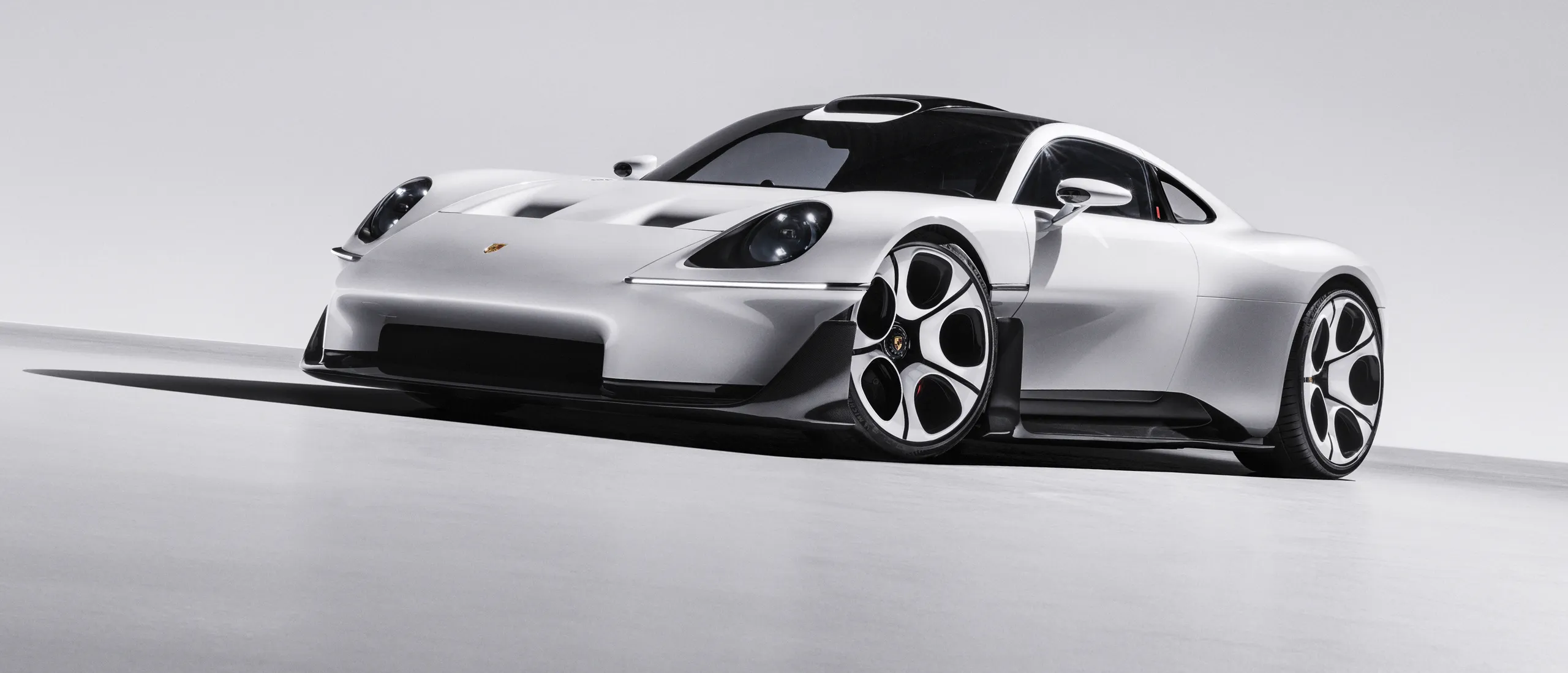
The Porsche Mission S is, according to the brand, a vision model: a mid-engined supercar concept. Porsche presented it on 15 October 2026 on a pier in Queens, New York, where the 550 Spyder was photographed in 1953. The setting ties the car to a historic Porsche model from the outset.
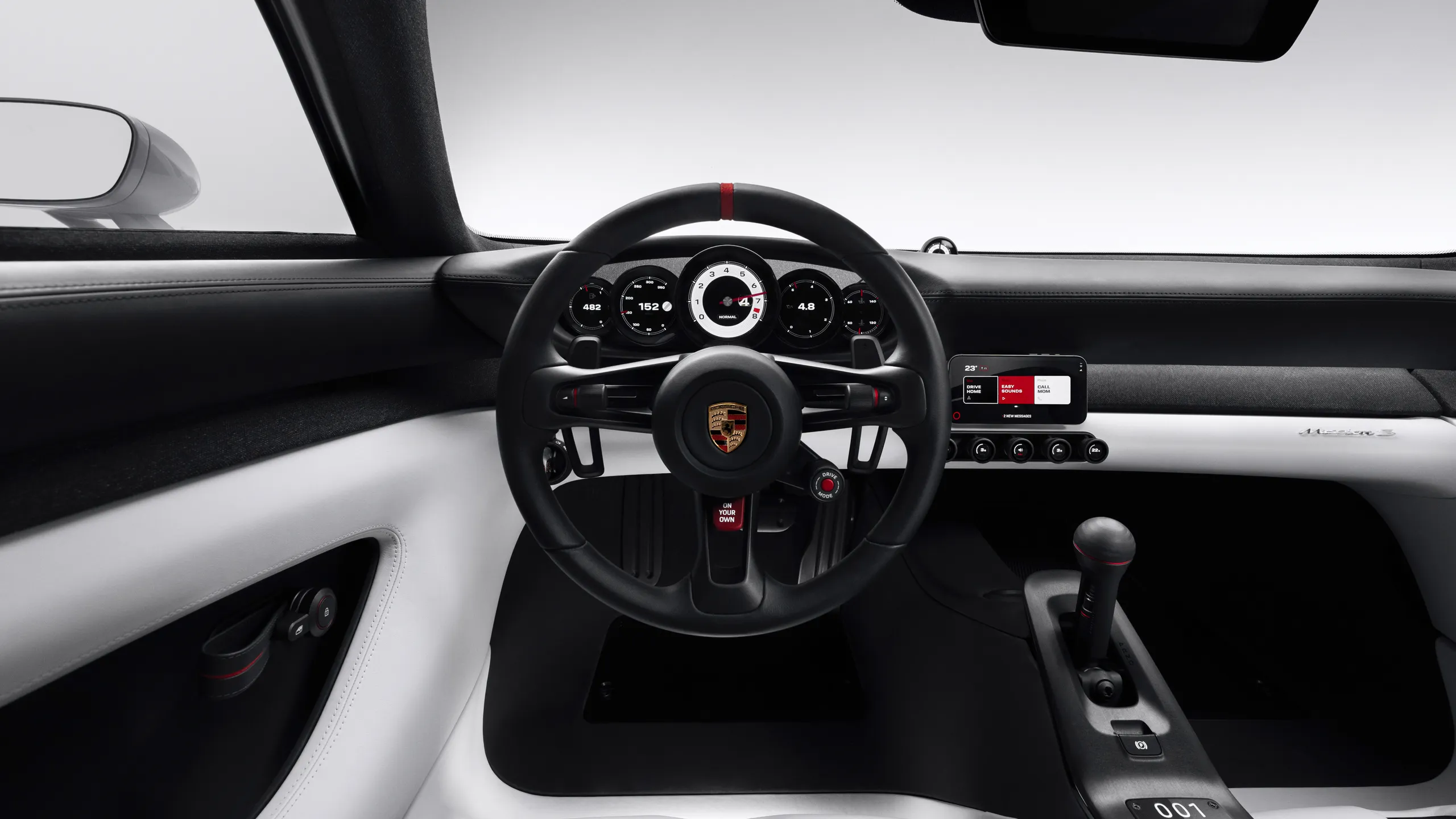
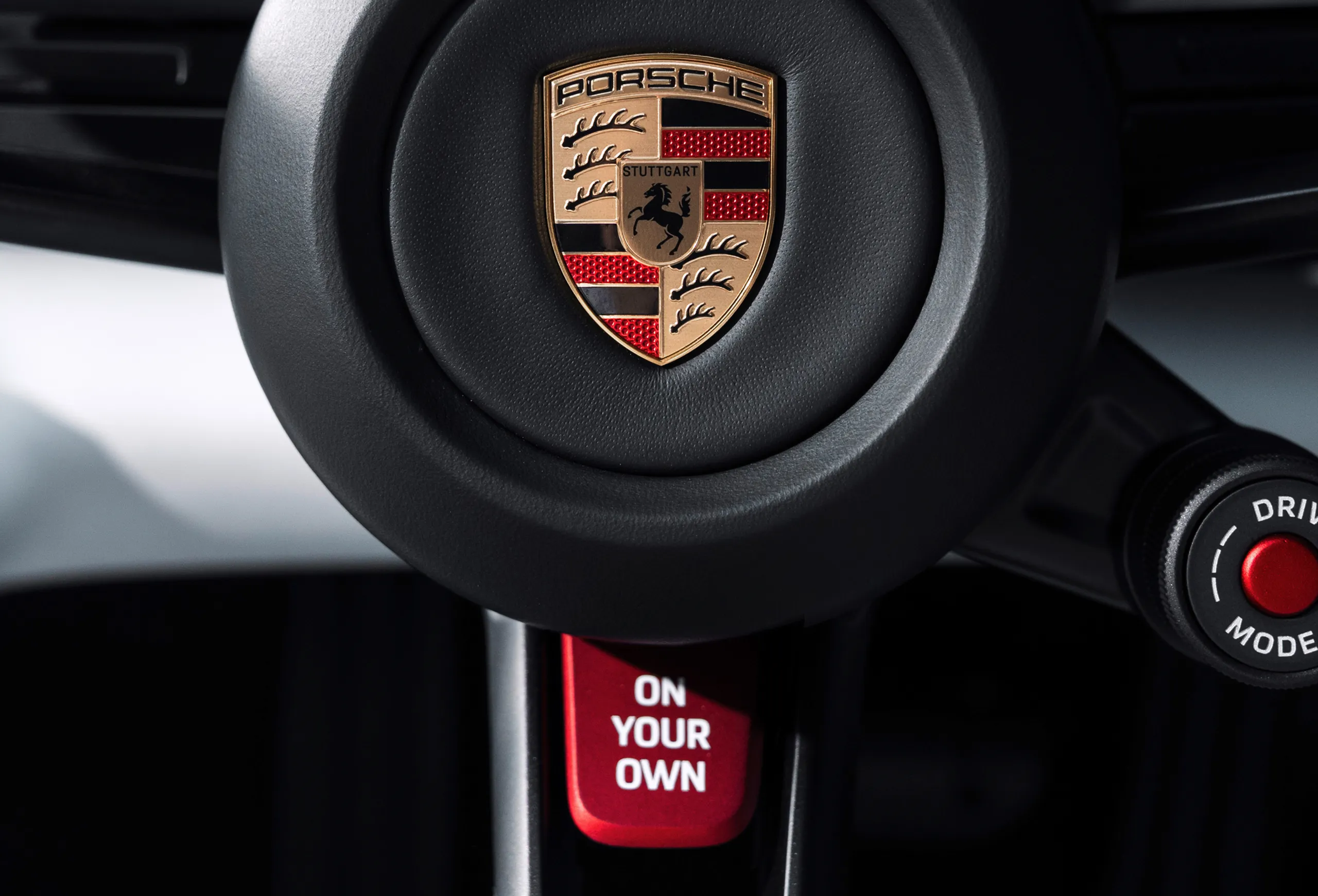
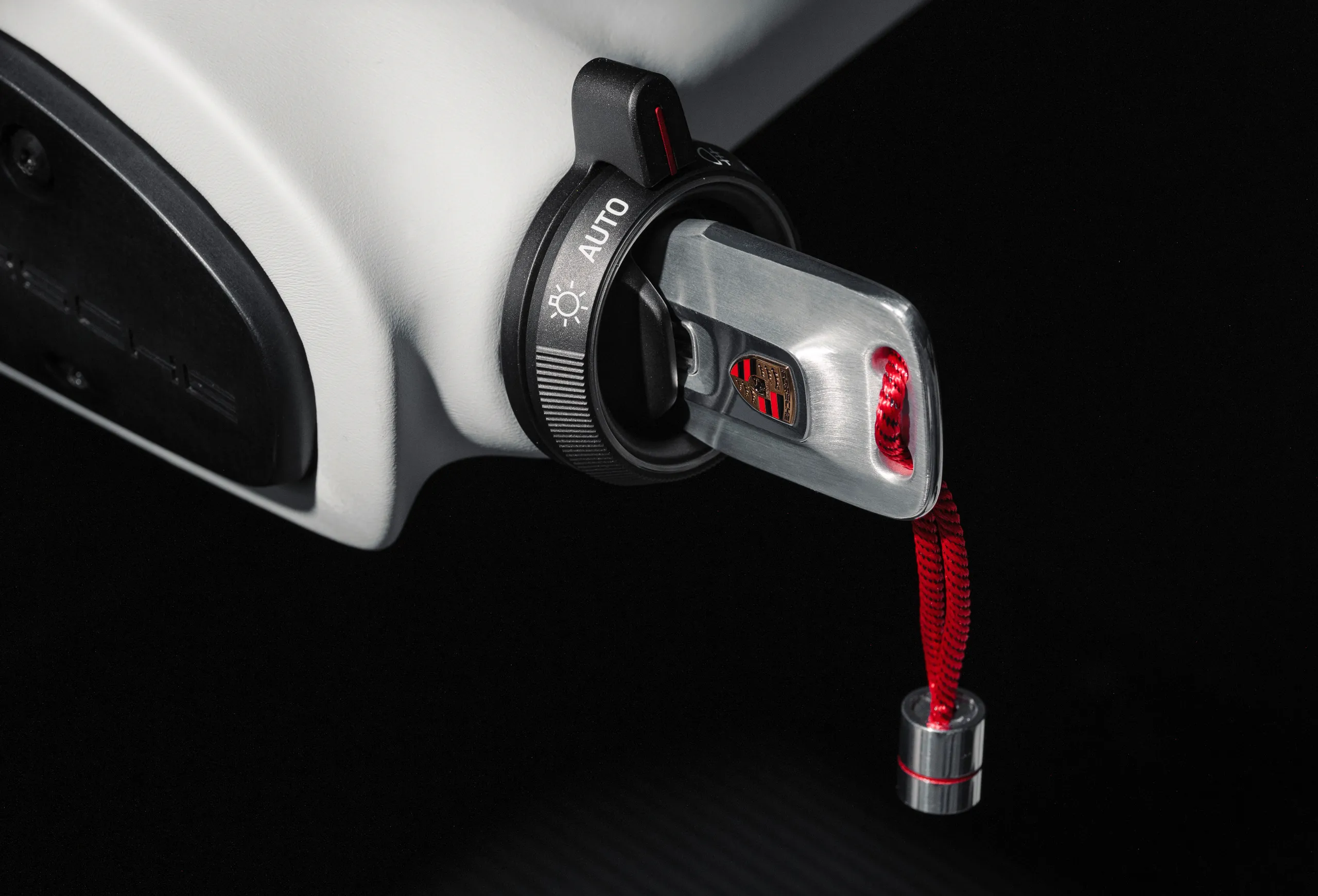
The brand announces two seats, each with a five-point harness. You settle in, buckle up, then insert an aluminium key to the left of the steering wheel: this is how Porsche says the car is started, in place of a start/stop button. In front of you are five round dials and a steering wheel with paddles. In the middle of the wheel sits a button called “On your own”.
The whole cabin, as announced, is built around the act of driving. The gear lever is height-adjustable and designed to be felt under the hand. The climate control is set with physical controls. The phone has its place on a retractable mount.
For its unveiling, the Mission S wore Firn White Metallic and Light Red Metallic, with Black Chrome and Special Black details.
Why it exists
Porsche gives the Mission S a precise role. According to the brand, the car bridges Porsche’s future and its heritage. The manufacturer also says it offers an immediate driving experience.
The choices announced for the cabin point the same way. The central screen and the passenger screen are gone. A physical key replaces the button. Climate settings are made with controls you operate by hand. The driver handles the essentials with gestures rather than menus.
The Mission S also has a place in the manufacturer’s strategy. It is part of Sportwagenschmiede ’35, Porsche’s strategic realignment. Michael Leiters, chairman of the executive board, presents it as a mid-engined supercar platform. In his words, the platform sits above the 911 and is meant to become a permanent part of the range.
What matters
The engine in the middle. The Mission S puts its engine in the middle of the car. According to the brand, the powertrain is not electric. Michael Leiters, quoted in the press, says the platform can take a combustion or hybrid powertrain. It could, in his words, be fitted with a PDK or a manual gearbox. The concept shown has a semi-automatic gearbox, the brand says.
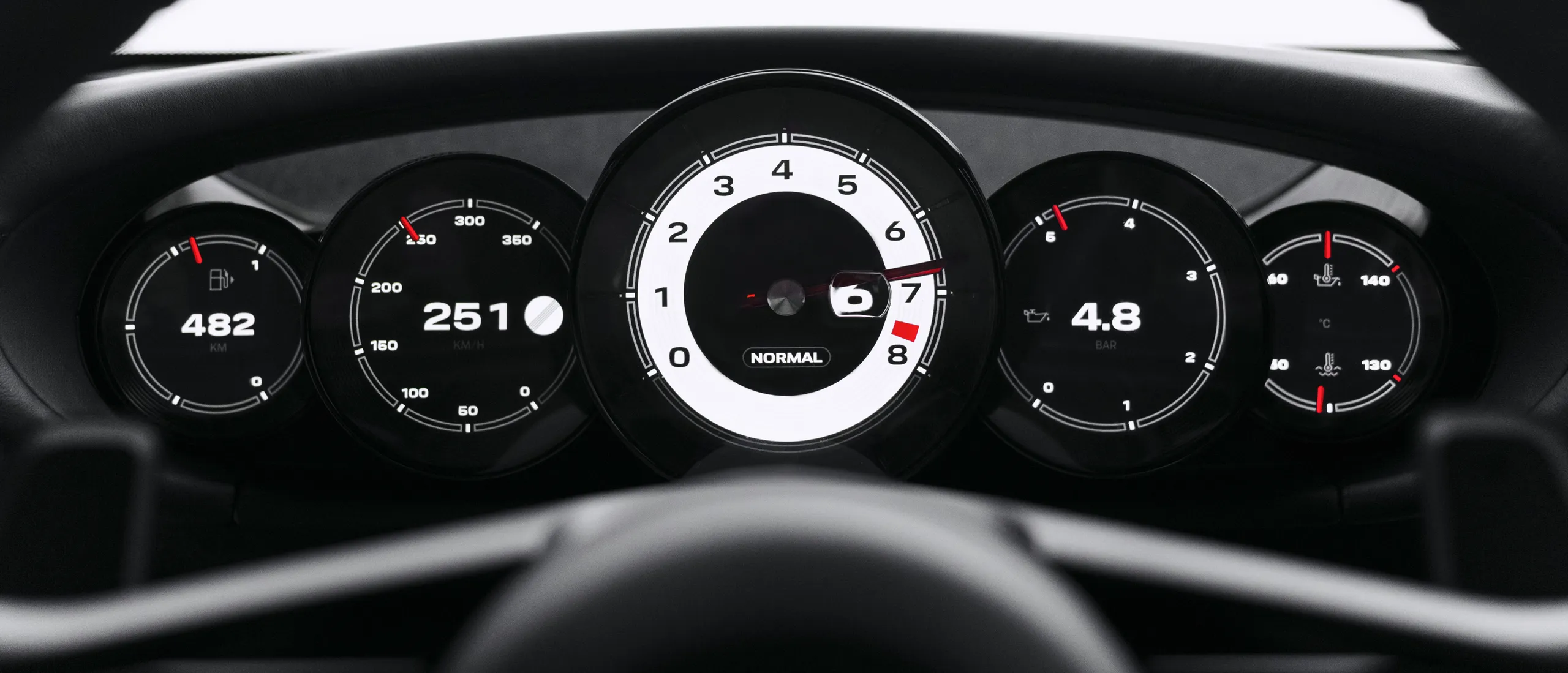
Five round dials that move around. The instrument panel has five round dials. In the centre sits a digital rev counter with an analogue needle. The instruments rearrange themselves according to the driving mode selected, so the information that matters at that moment is right in front of the driver. Porsche says the display stays quick and easy to read, even at high speed. According to the brand, the Sport Chrono element has been reworked and the central controls work push-pull: you push, you pull.
The red “On your own” button. A red button on the steering wheel switches off the driver aids. According to the brand, it sits at the centre of the wheel, between the shift paddles. With a single press, the driver chooses to take back control alone. The name of the mode says exactly that: it is up to you.
The phone instead of the screen. The brand announces a dashboard with no central screen and no passenger screen. A retractable, MagSafe-compatible phone mount takes over. The My Porsche app gives access to the car’s functions, according to the manufacturer. It also offers different digital instrument designs, so the driver can change the look of the dials from their phone.
A cabin designed to be strapped into. Both seats have a five-point harness, Porsche says. The belt buckle is integrated into the central bolster of the seats. The electric adjustment controls have been repositioned. These details are meant to let you buckle up and adjust the seat without fumbling for the controls.
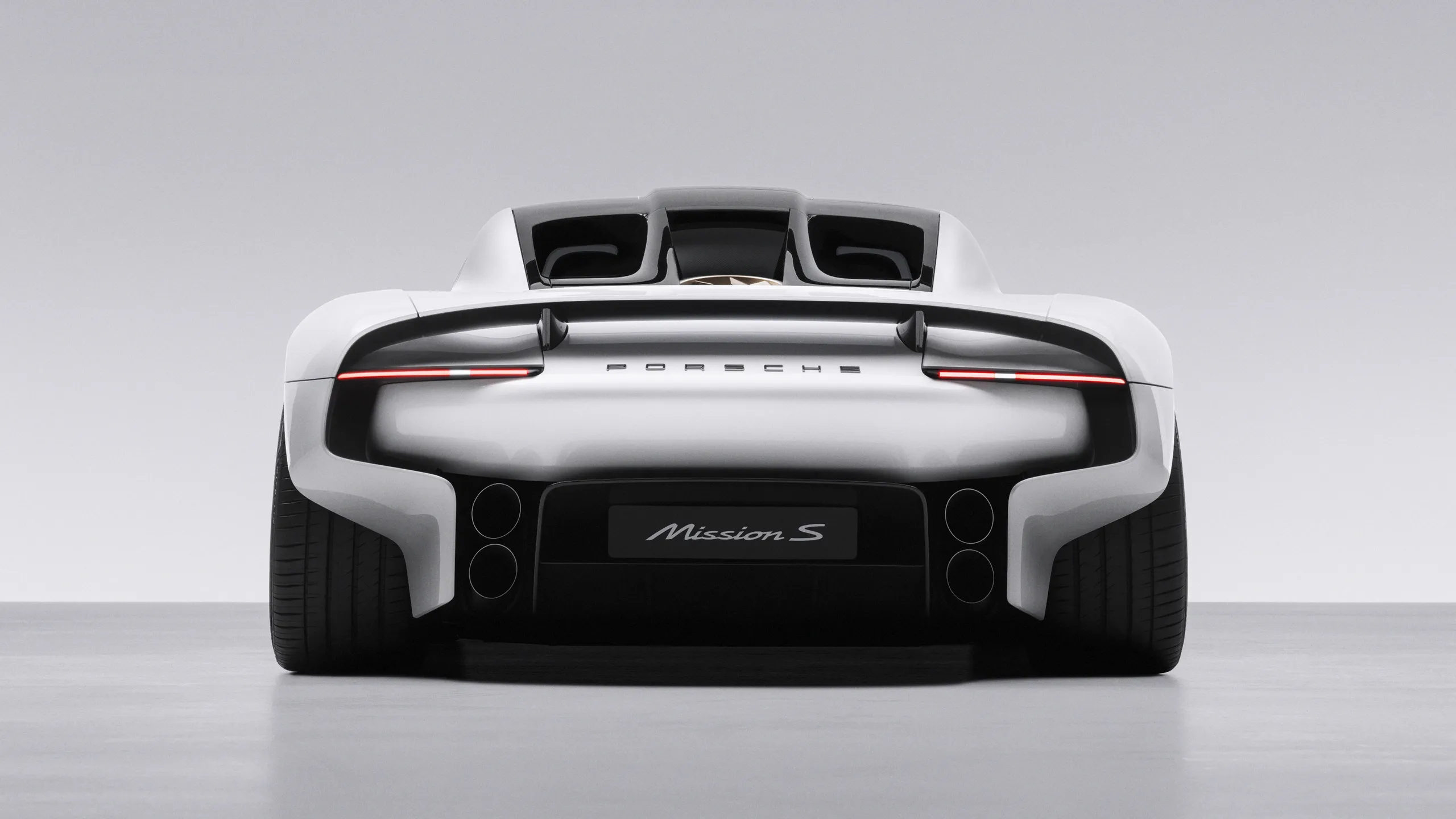
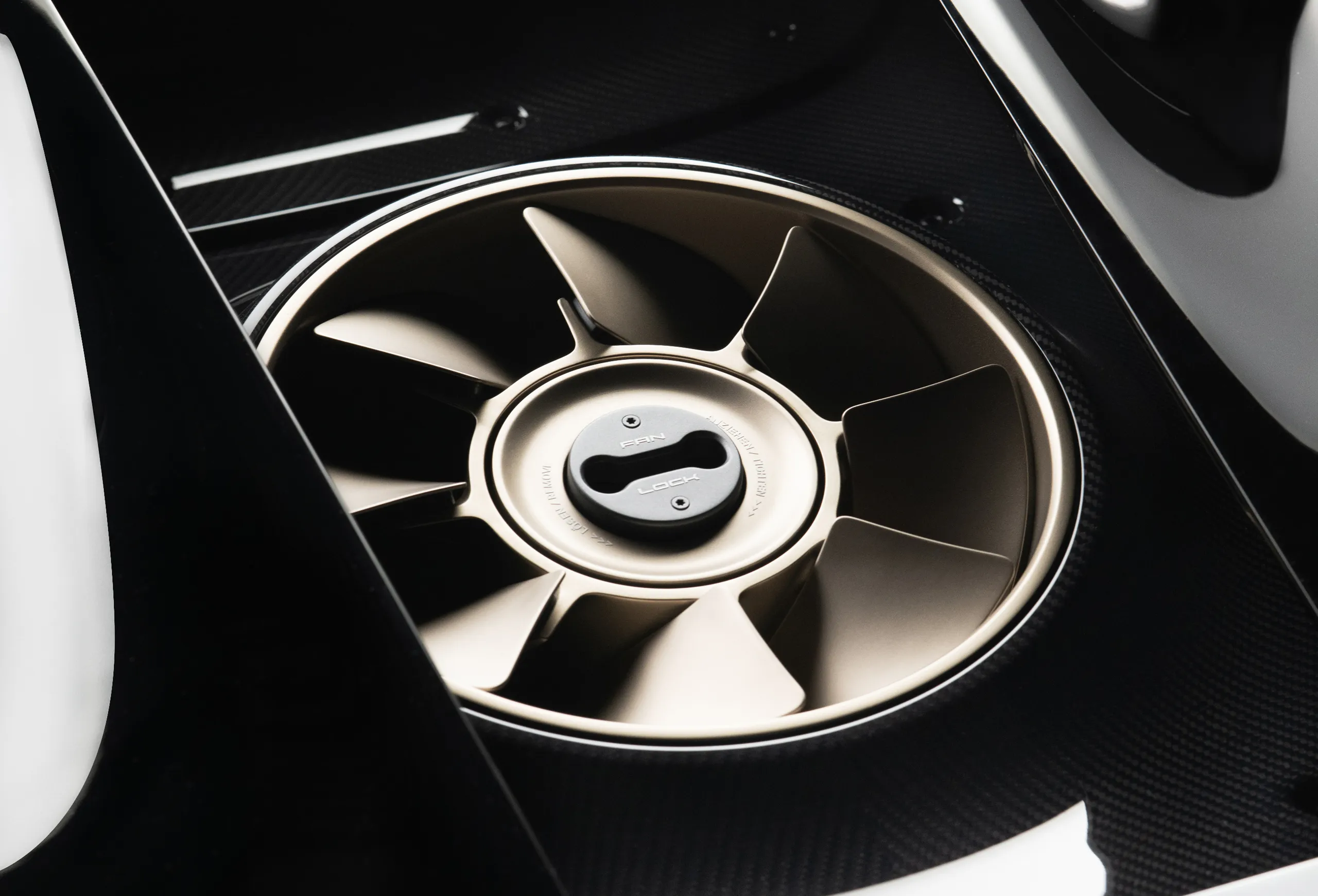
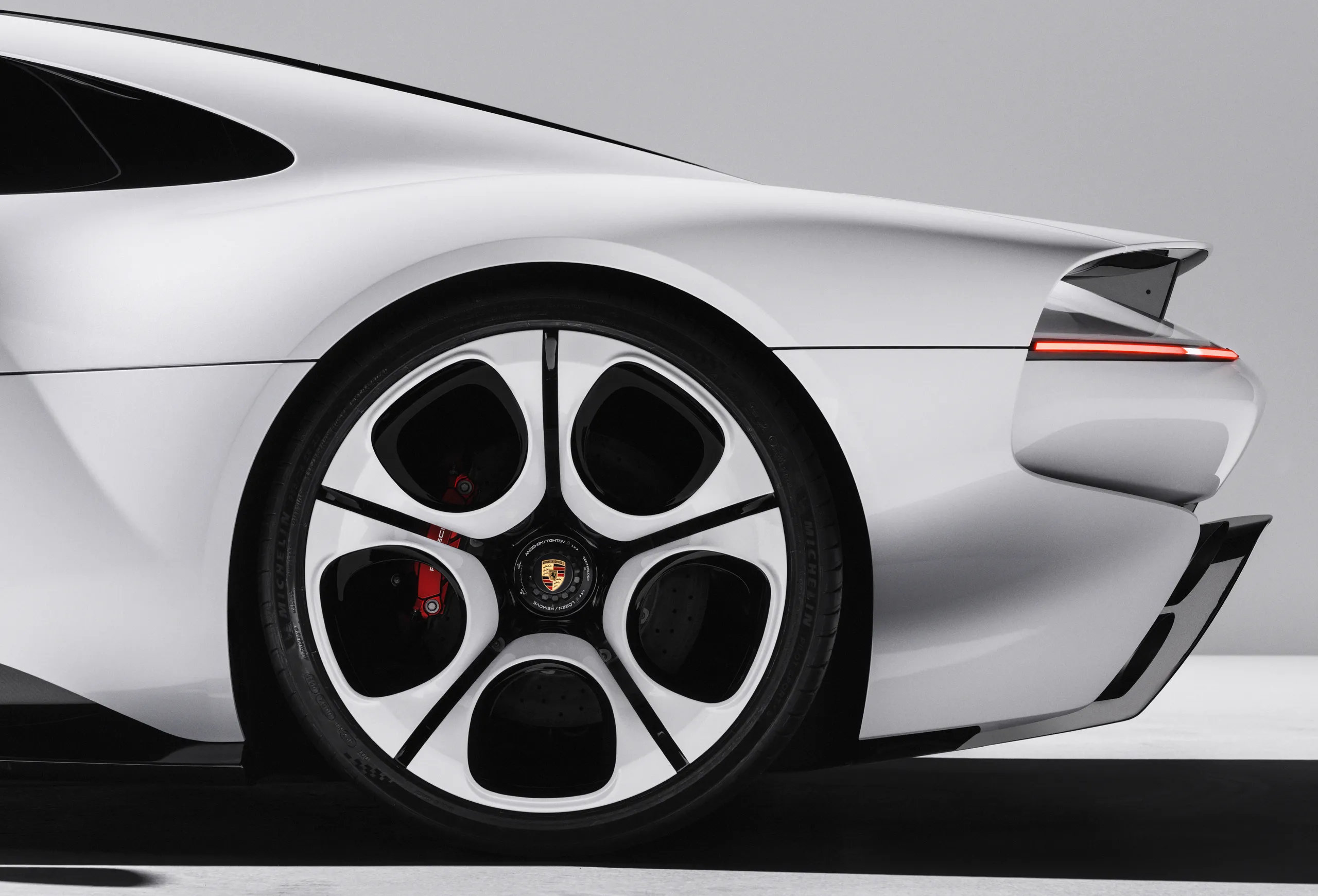
Bodywork that quotes history. A wraparound main line links the front and rear light signatures. The torpedo wings and the dynamic roofline draw on Porsche history. At the rear, an exposed, lightweight fan pays tribute to the 917. The wheels reinterpret the dial-style design of the 928. Finally, the brand announces an active rear wing integrated into the bodywork.
Day to day
The car starts with the aluminium key. You insert it to the left of the steering wheel, according to the brand. The gesture recalls Porsche’s sports cars of the past, and it replaces the start/stop button.
The gear lever adjusts for height, so each driver can bring it within easy reach. According to Porsche, this lever selects the D, P, N and R positions. It is also used to change gear on the semi-automatic gearbox. The paddles on the steering wheel offer a second way to change gear.
The phone clips onto its retractable mount as soon as you get in. Once stowed, the mount leaves the dashboard clear. Through the My Porsche app, you reach the car’s functions and choose the style of the digital instruments. The climate control, meanwhile, is still set by hand, with its physical controls.
Technical specifications
| Feature | Value |
|---|---|
| Status | Vision model (concept car), mid-engined supercar (announced) |
| Architecture | Engine in central position |
| Powertrain | Not electric (announced) |
| Gearbox | Semi-automatic, D, P, N, R positions (announced) |
| Seats | Two (announced) |
| Harness | Five-point on both seats (announced) |
| Instruments | Five round dials, rearranged according to driving mode |
| Rev counter | Digital with analogue needle, in the centre |
| Central controls | Push-pull operation |
| Steering wheel | Paddles and red “On your own” button (announced) |
| Starting | Aluminium key, inserted to the left of the steering wheel (announced) |
| Gear lever | Height-adjustable |
| Screens | No central or passenger screen; retractable MagSafe-compatible phone mount (announced) |
| Climate control | Physical controls (announced) |
| Wing | Rear, active and integrated (announced) |
| Cooling | Exposed fan at the rear, a tribute to the 917 |
| Wheels | Reinterpreted dial-style design from the 928 |
| Unveiling colours | Firn White Metallic, Light Red Metallic; Black Chrome and Special Black details (announced) |
| Design | Style Porsche, led by Tobias Sühlmann (announced) |
What the brand says
According to Porsche, the Mission S bridges the brand’s future and its heritage. References to the past are plentiful: the 917 for the fan, the 928 for the wheels, torpedo wings for the silhouette.
The manufacturer says the car offers an immediate driving experience. It also states that the display stays quick and easy to read, even at high speed.
Michael Leiters, chairman of the executive board of Porsche AG, sees the Mission S as a mid-engined supercar platform, positioned above the 911. He describes it as a permanent addition to the range. According to his comments reported in the press, the platform can take a combustion or hybrid powertrain, with a PDK or manual gearbox.
Finally, the brand says the design was developed by Style Porsche, its in-house design department, under the direction of Tobias Sühlmann.
Why it caught our eye
We noticed it for its aluminium key, inserted to the left of the steering wheel, and for the red button that hands the driving back to the driver. We also like that Porsche slips nods to the 917 and the 928 into the fan and the wheels.
Exactly the kind of brand we’d love to come across on O!deal one day.
SourcesPorsche (new tab) · designboom (new tab) · T3 (new tab) · HiConsumption (new tab)
Frequently asked questions
- How does the Porsche Mission S start?
- It starts with a physical aluminium key, inserted to the left of the steering wheel in place of a start/stop button.
- How many seats does it have?
- It has two seats, with a five-point harness on both.
- Is there a central screen on board?
- No, there is neither a central screen nor a passenger screen. A retractable, MagSafe-compatible phone mount is planned, and the My Porsche app gives access to the car's functions and to different digital instrument designs.
- What is the red button on the steering wheel for?
- The central "On your own" button switches off the driver aids.
Also worth reading
- O!radarZendure
Zendure EVFlow AC: the wall charger that waits for the sun
The Zendure EVFlow AC charges electric cars at up to 22 kW and draws on a household's solar surplus from 1.4 kW. It starts with an RFID card, the app or simply when you plug in.
- O!radarBRABUS
BRABUS P 900 Rocket Edition: the G 63 turned 662 kW pick-up
Built in Bottrop on a Mercedes-AMG G 63, the BRABUS P 900 Rocket Edition is a four-door pick-up with 662 kW, limited to 10 units worldwide.
- O!radarThora
Thora ELF: a cup-holder air purifier with a titanium-alloy core
The Thora ELF is a personal air purifier sized for a car's cup holder, with an engraved aluminium body, PM2.5 and TVOC sensors and a washable titanium-alloy tube.