


Pichet 1875: Manufacture de Digoin revives 1930s elegance for its 150th
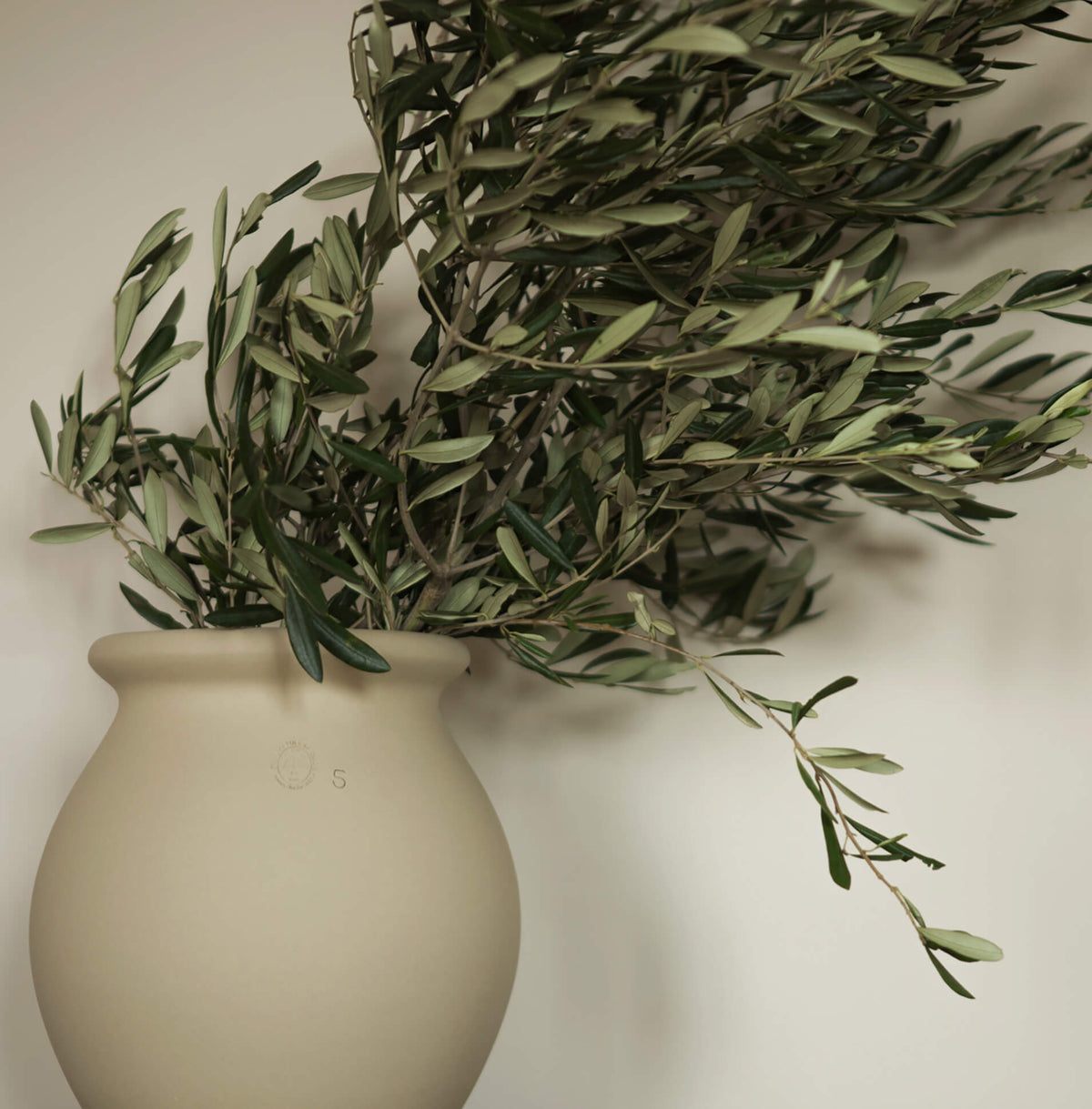
A hand-shaped Burgundy stoneware jug, brought back for a French manufactory's 150th anniversary. Two litres, a capacity that suits any table.

What it is
The Pichet 1875 is a tableware piece from Manufacture de Digoin, a French house based in Burgundy. It comes in a single variant, Grès Brut, which lets the raw material show through in all its simplicity.
This isn’t an everyday object made on an industrial production line. Each jug leaves the workshop having been shaped and glazed by hand, from stoneware made with local natural mineral materials. It’s aimed at people looking for a piece with a story and a regional grounding, rather than a purely functional container.

Why it exists
The Pichet 1875 isn’t a new creation that appeared out of nowhere. According to the brand, it pays tribute to an iconic model kept in its own archives, and this reissue marks the 150th anniversary of Manufacture de Digoin. The idea, then, isn’t to launch a new product, but to bring back to life a piece that belongs to the house’s heritage.
The brand also places this jug within a precise aesthetic: it describes its style as evoking the elegance of 1930s decorative arts. What this piece addresses isn’t purely practical — pouring a liquid — but also aesthetic: bringing back to today’s tables a shape and style inherited from another era, without resorting to a straight museum copy.
What matters
The stated capacity is two litres. That’s a volume that lets you serve several people without constantly refilling, whether for water, wine or another drink at the table. Used as a vase, this capacity also leaves room for a generous bouquet rather than a single stem.
The stated dimensions — 19 centimetres wide by 17 centimetres tall — give a squat rather than elongated shape. This proportion directly affects the jug’s stability once filled, and how much space it takes up on a table already crowded with plates and dishes.
The material, Burgundy stoneware, changes both the feel in the hand and the visual effect compared with fine ceramic or glass. Stoneware is a dense material, giving the object weight and character, in keeping with the idea of a handcrafted piece rather than a disposable tableware accessory.
On care, the jug is dishwasher-compatible, but the brand recommends hand-washing with a non-abrasive sponge. In practice, it’s better to wash it by hand day to day: that’s the method the brand highlights to preserve the glaze and the appearance of the piece over time, even though the dishwasher is stated as an option.
The secondary use as a vase is worth mentioning, as it changes how you might think about this object when buying it. It’s not a jug to reserve for mealtimes only: it can stay in place year-round on a sideboard or hallway table, filled with flowers rather than a drink.
Finally, the place of manufacture — France, and more precisely Burgundy — geographically situates the whole shaping and glazing process. For anyone looking for a clearly identified European origin, this detail matters.

Day to day
Fill the Pichet 1875 with water, wine or another drink for a meal, or use it as a vase for a bouquet, depending on the occasion.
For care, there are two options. The jug is stated to be dishwasher-compatible, which simplifies daily life after a meal. But the brand also recommends hand-washing, with a non-abrasive sponge, to preserve the piece’s appearance over time. In practice, hand-washing remains the safer choice for a handcrafted piece of this kind.
Technical specifications
| Feature | Value |
|---|---|
| Width | 19 cm |
| Height | 17 cm |
| Capacity | 2 litres |
| Manufactory’s age | 150 years |

What the brand says
Manufacture de Digoin states that the Pichet 1875 pays tribute to an iconic model kept in its archives, reissued specifically to celebrate the house’s 150th anniversary. This link to an archive model is presented as the heart of the project, rather than a purely commercial exercise built around an anniversary.
The brand also describes the jug’s style as evoking the elegance of 1930s decorative arts, placing the object within a precise, dated aesthetic rather than a vague, timeless style.
Finally, the manufactory states that each piece is unique: the irregularities resulting from hand-shaping are presented as a signature, not a manufacturing flaw. According to the brand, these variations do nothing to affect the quality of the object.
Why it caught our eye
We were drawn to how firmly it is rooted in the history of a French manufactory marking 150 years with a genuine archive piece, not just a promotional item. We also like the idea that every irregularity in the stoneware tells the story of the hand that shaped it.
Exactly the kind of brand we’d love to come across on O!deal one day.
Also worth reading
- O!radarDuralex
Duralex Lys: the rectangular tempered glass bowl made in the Loiret
A rectangular tempered glass bowl, designed to go from worktop to microwave without a second thought. Made in France, by a company now owned by its own employees.
- O!radarGuy Degrenne
Réminiscence Fleurie: the Guy Degrenne plate that sets the scene before dinner even starts
A Limoges porcelain charger with hand-painted floral garlands, designed to dress the table before the meal even begins.
- O!radarPanoramaknife
Mont Cervin XL: the oak chopping board that pays tribute to the Swiss Alps
A solid board carved from a single piece of oak, hand-shaped in Switzerland and designed for both cutting and serving at the table.


